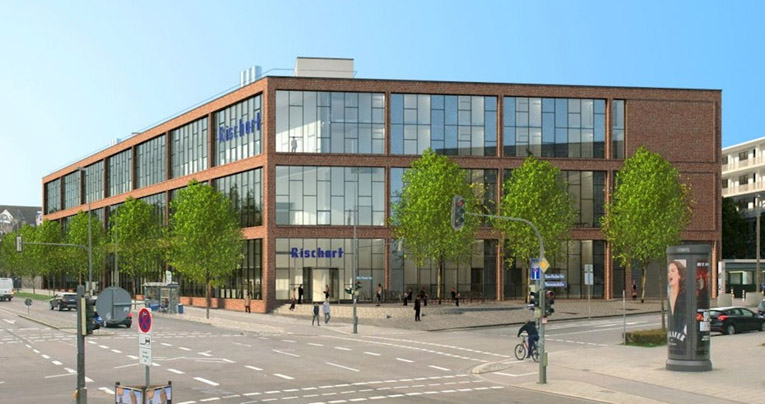
PHOTOVOLTAIC FACADE GLASS FROM ML SYSTEM IN THE NEW RISCHART BAKERY BUILDING IN MUNICH
5 March 2026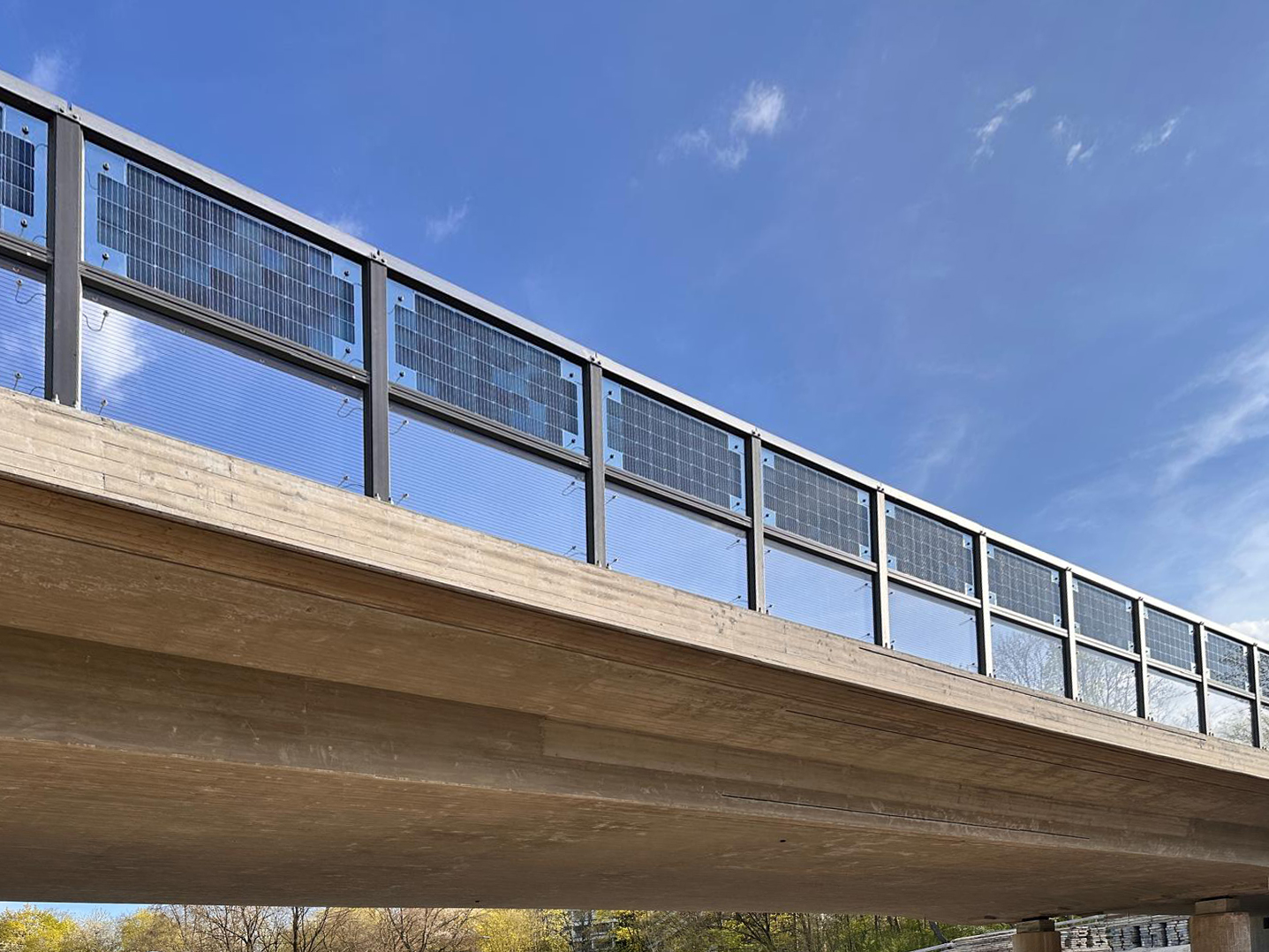
Bifacial Acoustic Barriers – ML System Transforms Munich Viaducts into Power Plants
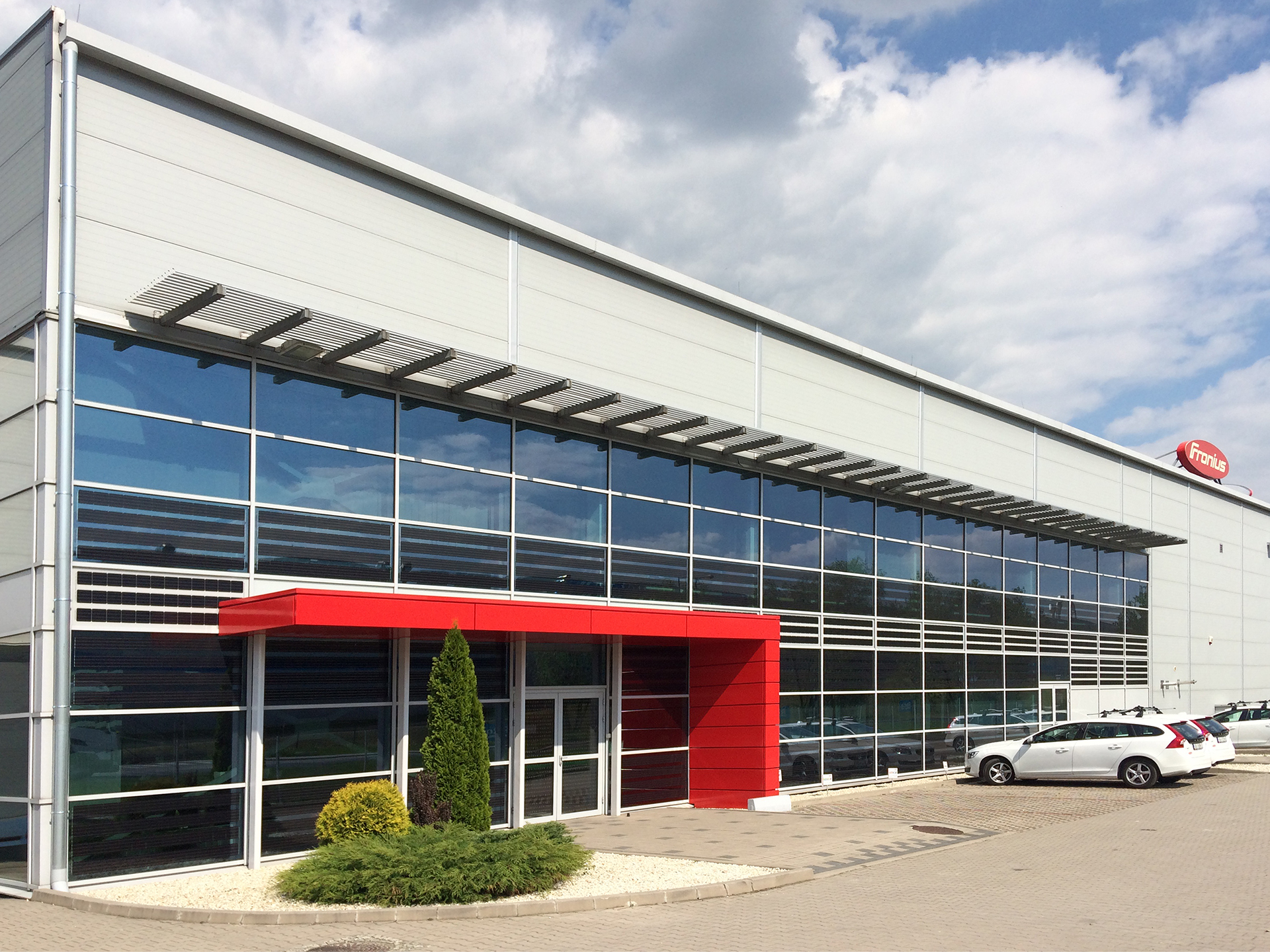
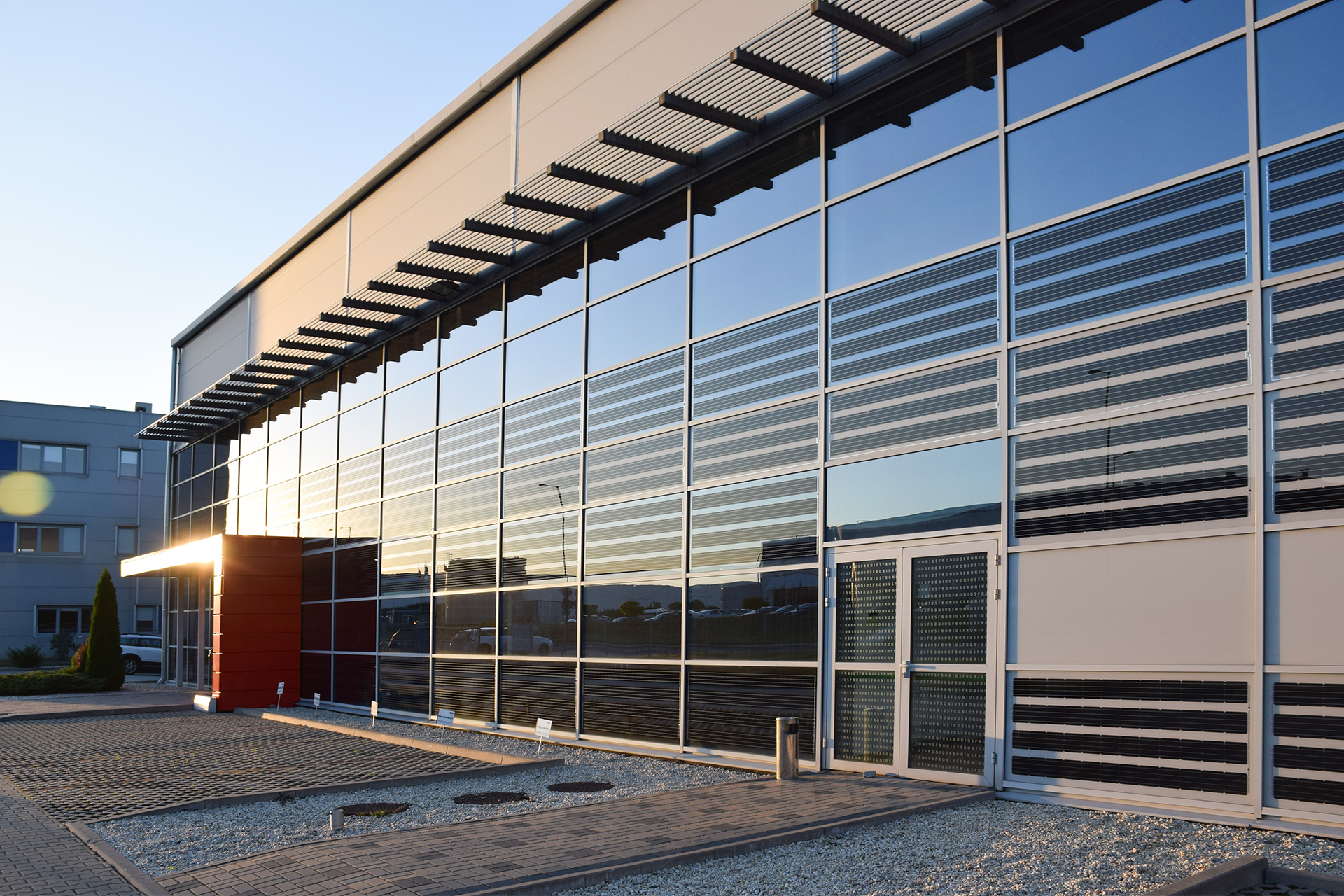
19 May 2026Time is the harshest judge of any technology. When the Fronius Polska headquarters in Gliwice underwent a thorough renovation a few years ago, it was a pioneering energy modernization project for an office building in Silesia. Instead of a traditional facade refresh, an innovative step was taken: the installation of active BIPV facades. Today, in retrospect, the leaders of both companies met to summarize the effects of this collaboration, which permanently changed the face of the Gliwice facility.
Meeting of leaders: On technology that has been working for years
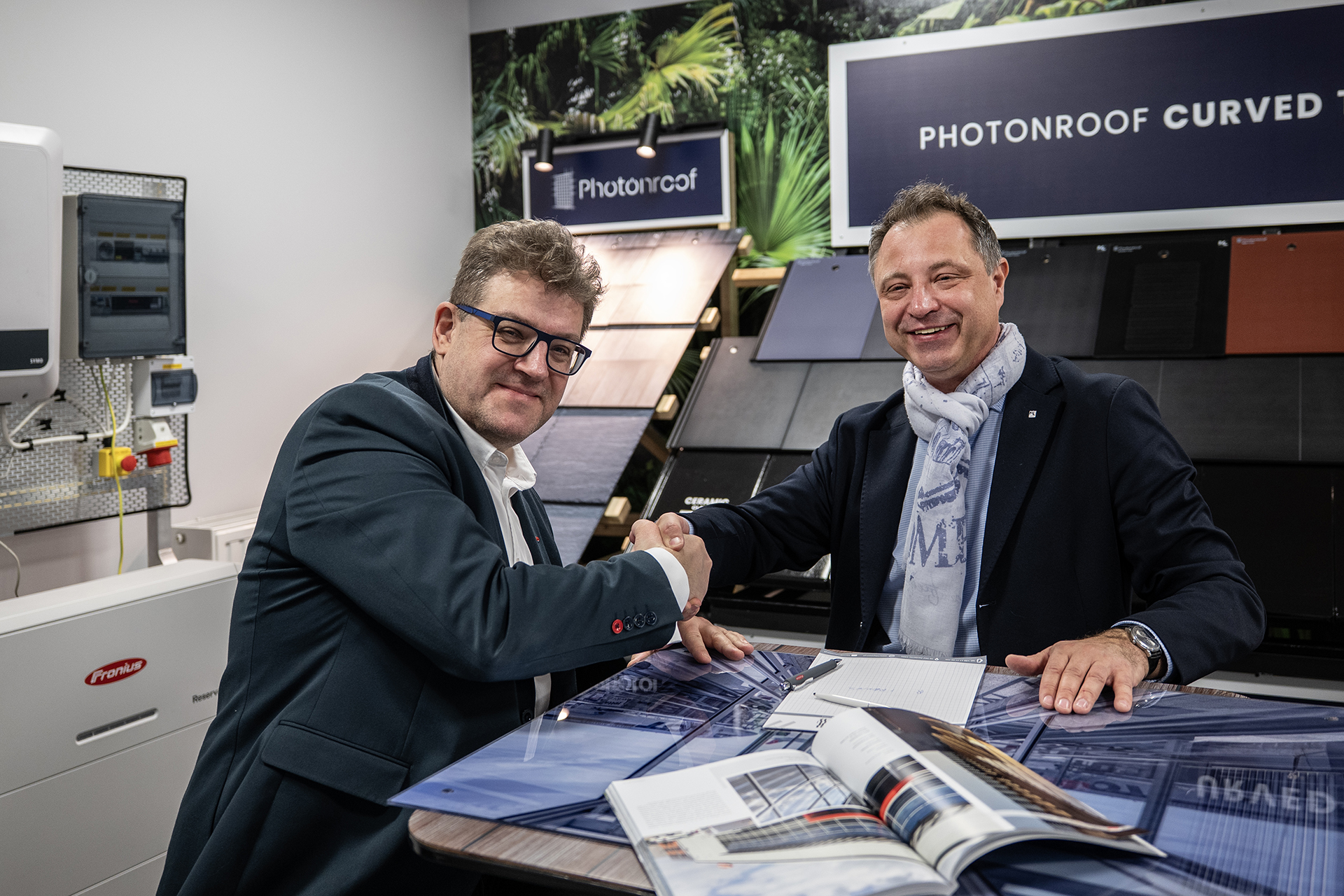
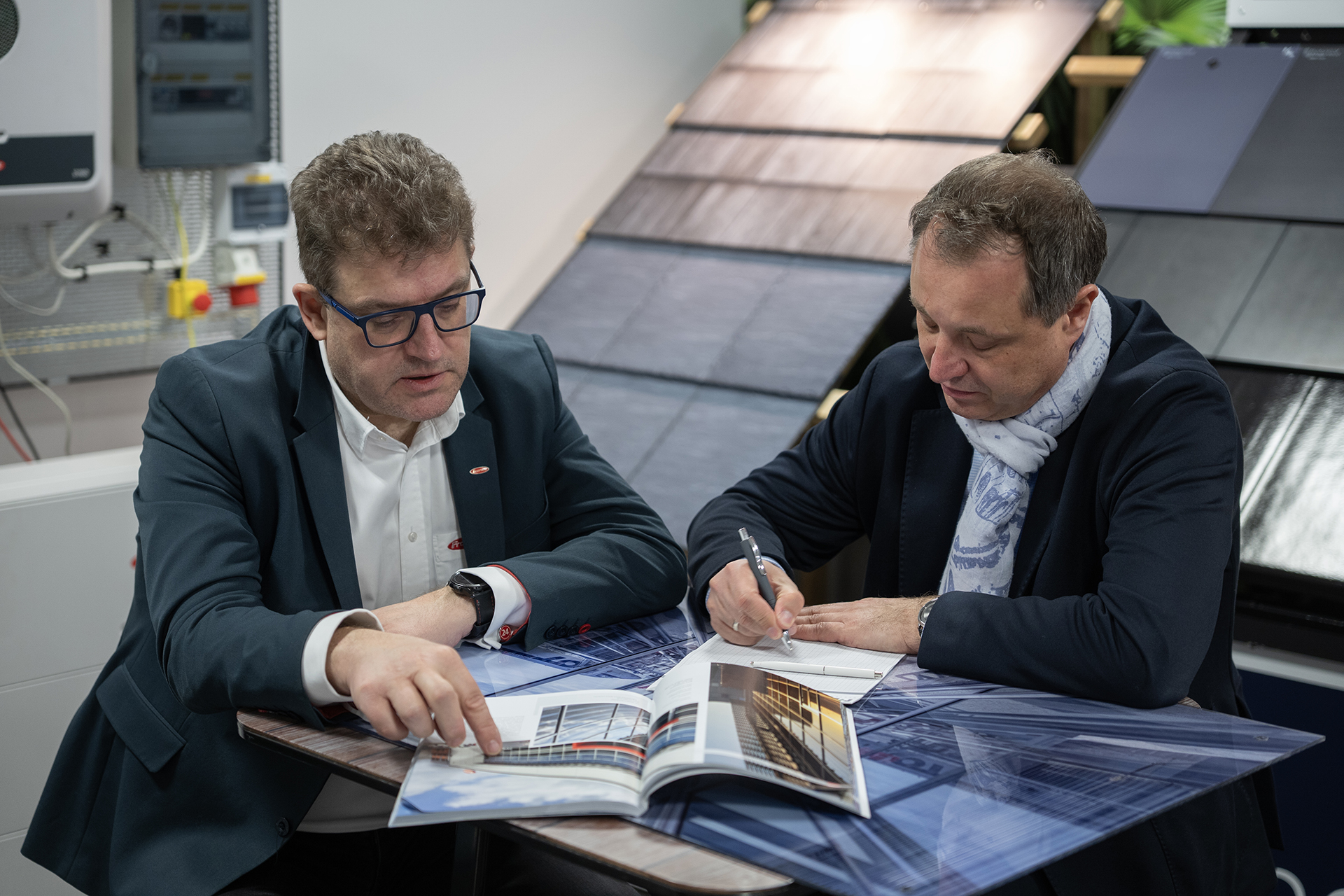
The recent conversation between the CEOs at the ML System headquarters became an opportunity to return to the roots of this project. Maciej Piliński – CEO of Fronius Polska, and Dawid Cycoń – CEO of ML System, emphasized that what once seemed like a bold vision is now a standard of efficiency.
The CEO of Fronius Polska, recalling the state of the building years ago:
“The facility in Gliwice, despite its solid construction, visually began to fall short of our brand standards. Previously, it looked like a typical, slightly improved ‘old hall’. However, it was not only aesthetics that forced the changes. Working conditions were crucial. The old facade could not cope with thermal insulation, which generated high maintenance costs and real discomfort for the people working there.”
Comfort that could not be replaced by standard air conditioning
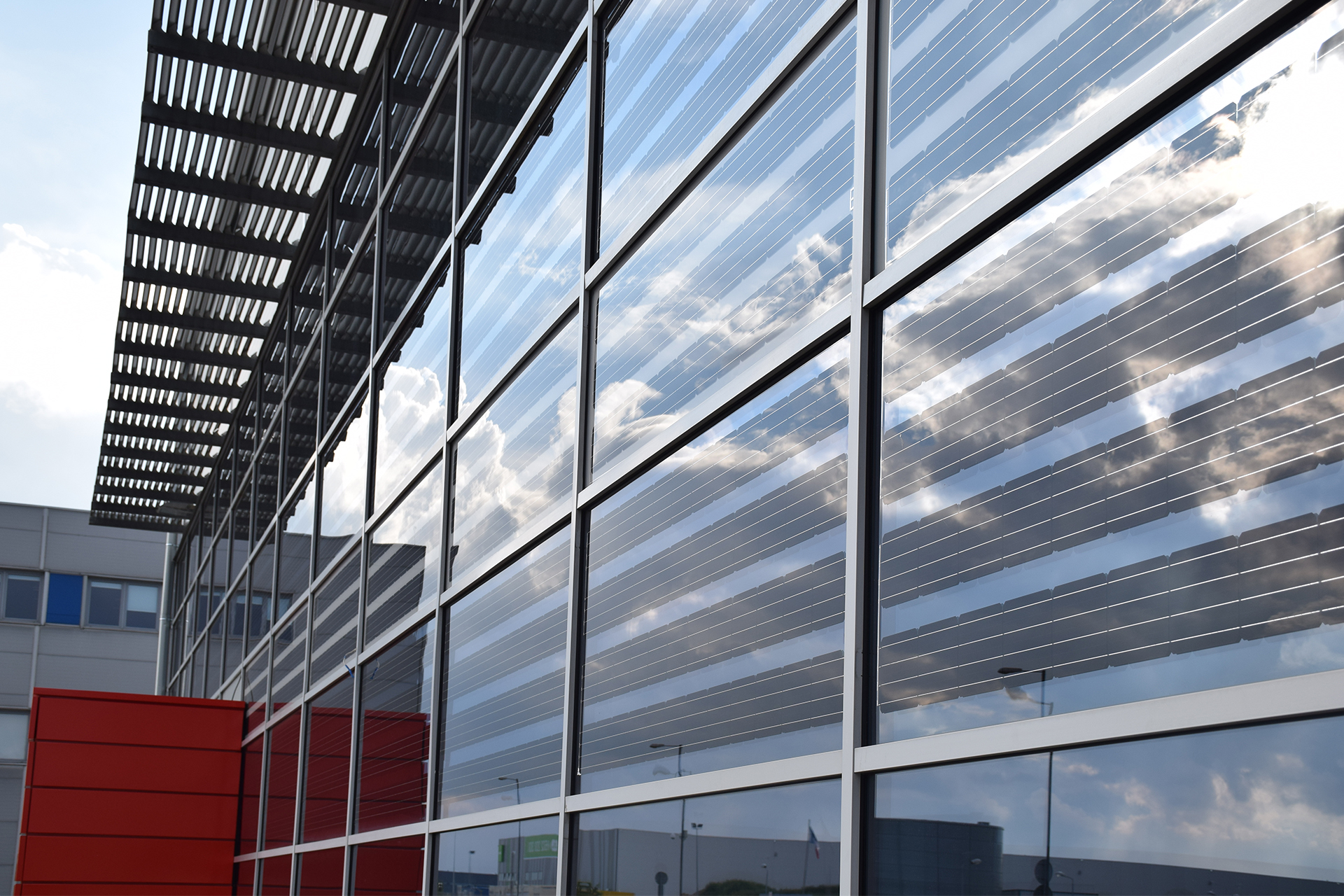
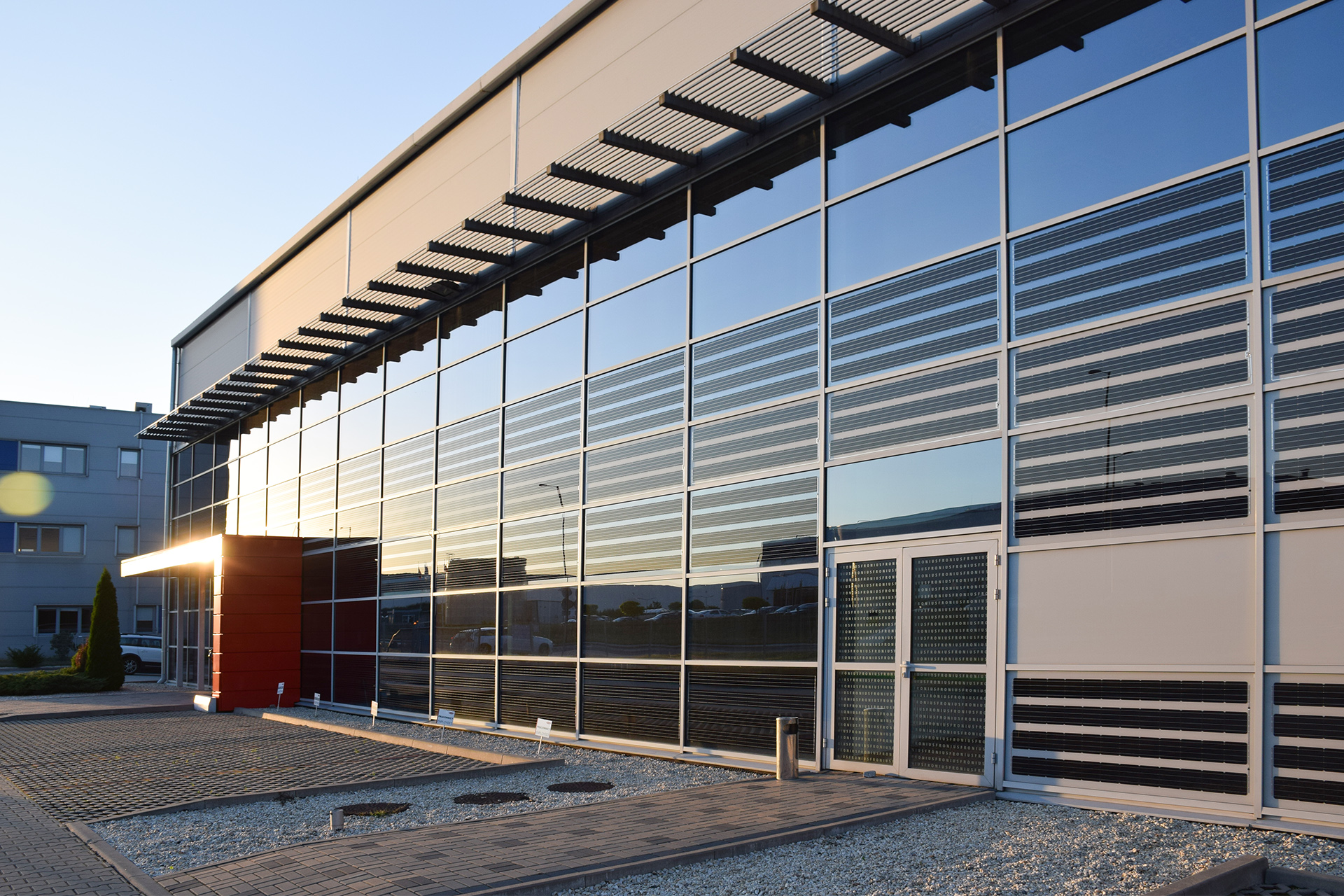
The hybrid approach applied by the Polish photovoltaic manufacturer solved a problem that traditional technology could not handle. This hybrid nature consisted of the precise combination of two types of glazing: active glass, which generates clean energy from the sun, and passive glass, equipped with a special coating that effectively blocks rays that heat up the interiors.
Before the modernization, the temperature in the offices could reach 30 degrees Celsius. As the CEO of ML System explained, this was due to the so-called lens effect. With a large amount of glazing, air conditioning only cools the air deep inside the room, but it is unable to neutralize the heat radiation directly by the window, which caused tremendous discomfort for people working close to the facade.
The project also ensured impeccable aesthetics and the continuity of the building’s architectural line. For this reason, it was decided to install cells even in the floor slab bands and shaded areas. Although these modules are intentionally not connected to the grid, their presence allowed for maintaining a cohesive look for the entire facade while optimizing energy yields in sunny areas.
The CEO of ML System explained why their proprietary technology turned out to be a breakthrough:
“The facade ceased to be perceived as a passive barrier. It became a standard structural element that produces energy and actively manages indoor comfort.”
Today, after several years of operation, the 10 kWp system not only stabilizes the temperature but also serves as a technological showcase for the company. It allows for the live presentation of the energy production profile, which powers the office, charges electric cars, and even heats water.
Strategic security and Local Content: Why is Polish technology a certainty for business?
During the CEOs’ conversation, a topic that is extremely important nowadays emerged – strategic security. It is worth noting that an approach based on smart economic patriotism is not a new trend for us; we started operating this way many years ago, and the best proof of this is our long-standing cooperation with Fronius. The implementation in Gliwice is an example of the so-called Local Content in practice. It shows that relying on domestic technological thought is not only about caring for the GDP, but also real protection against geopolitical risk and remote interference in energy systems by foreign entities.
Maciej Piliński emphasized that choosing a supplier from Poland and Europe is a matter of protecting critical infrastructure:
“After all, we are constantly operating in a very delicate matter, which is the power sector. Where it is easy to disrupt energy production and lead to a blackout. So here… this issue of cybersecurity must be put in the first place.”
Modern power engineering does not tolerate compromises, which developed Western markets understand perfectly well. In countries such as Italy, Austria, or Germany, the issue of cybersecurity has become one of the main arguments for investors and governments to rely on European entities. Those markets understand that only native technology provides a full guarantee of protection against grid attacks and ensures technological sovereignty. Building strong European brands is their only way to maintain independence against the power of Asia. Poland should follow the same path, especially in strategic sectors like energy.
Cybersecurity: the dependence of infrastructure on non-European suppliers is a real risk of remote interference. A mere “push of a red button” by a foreign entity is enough to shut down a significant portion of energy production.
Local Content: choosing a Polish photovoltaic manufacturer guarantees that public money works within the country and supports an economy that complies with environmental standards.
Fire protection: parameters are crucial for stakeholders and architects – ML System modules can act as a fire barrier with a resistance of 60 to 120 minutes. This is possible due to the transfer of as many as 20 patents into actual production.
The joint implementation in Gliwice is an example of the so-called Local Content. It shows that relying on domestic technological thought is not only about caring for the GDP, but also real protection against geopolitical risk and remote interference in energy systems by foreign entities.
Summary: An investment that set the direction
The success of the project in the Silesian Voivodeship became a strong reference for ML System in the implementation of subsequent major investments, such as the West Railway Station (Dworzec Zachodni) in Warsaw or the DC2 skyscraper in Vienna. This proves that a photovoltaic facade is a solution that does not lose its value over the years but becomes the foundation of modern and safe construction throughout Poland or Europe.